backtofrontshow pricing
Introduction to Backtofrontshow Pricing
Understanding backtofrontshow pricing is essential for anyone considering this platform for their business, content, or digital experience needs. Pricing is often the deciding factor when evaluating software or services, but it’s not just about the numbers—it’s about the value behind those numbers. Whether you are a startup, a growing business, or an established organization, knowing how backtofrontshow pricing works can help you make a confident, informed decision.
In this in-depth guide, we will break down backtofrontshow pricing structures, explain what you get at each level, explore real-world use cases, and help you determine whether the investment aligns with your goals. This article focuses solely on giving you a clear, practical, and expert-level understanding of backtofrontshow pricing without unnecessary complexity.
What Is Backtofrontshow and Why Pricing Matters
Before diving into backtofrontshow pricing, it’s important to understand what the platform typically represents. Backtofrontshow is commonly associated with tools or services designed to bridge the gap between backend functionality and frontend user experiences—often enabling seamless workflows, automation, and digital presentation.
Pricing matters here because:
- The platform often serves multiple use cases
- Features can vary significantly between plans
- Scalability impacts long-term cost
- ROI depends on how effectively the features are used
In other words, backtofrontshow pricing is not just a cost—it’s a reflection of capability, flexibility, and long-term value.
Core Structure of Backtofrontshow Pricing
Tier-Based Pricing Model
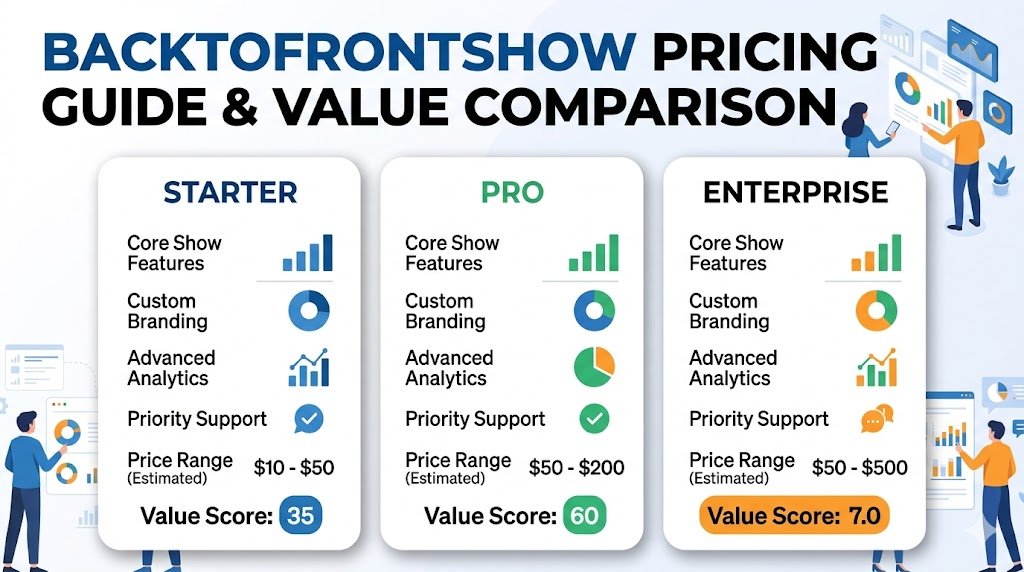
Most implementations of backtofrontshow pricing follow a tier-based structure. This means users can choose from different plans depending on their needs and budget.
Typical tiers include:
- Entry-level or starter plans
- Mid-tier professional plans
- Advanced or enterprise-level solutions
Each tier is designed to provide increasing levels of access, features, and support.
Subscription vs One-Time Payment
Backtofrontshow pricing may also vary in terms of payment models:
- Monthly subscription plans for flexibility
- Annual billing with discounted rates
- Occasionally, one-time payment options for lifetime access (less common)
For most users, subscription pricing is the standard, offering continuous updates and support.
Entry-Level Backtofrontshow Pricing
What You Get at the Basic Level
Entry-level backtofrontshow pricing is designed for individuals or small teams. It usually includes:
- Core functionality
- Limited integrations
- Basic analytics or reporting tools
- Restricted usage limits
This level is ideal for:
- Freelancers
- Early-stage startups
- Small projects testing the platform
Cost Expectations
Basic backtofrontshow pricing
is typically affordable, often positioned to attract new users. While exact figures vary, this tier is meant to minimize risk and allow experimentation.
Limitations to Consider
While the entry-level pricing is appealing, it comes with constraints:
- Limited scalability
- Fewer customization options
- Restricted performance capacity
For growing businesses, these limitations can quickly become noticeable.
Mid-Tier Backtofrontshow Pricing
Features Included in Professional Plans
Mid-tier backtofrontshow pricing offers a significant upgrade in capabilities. This is where most users find the best balance between cost and value.
Features often include:
- Expanded integrations
- Advanced customization tools
- Improved performance and speed
- Enhanced analytics and reporting
- Priority support
Who Should Choose This Plan
This level is ideal for:
- Growing businesses
- Marketing teams
- Agencies managing multiple projects
It provides enough flexibility to scale without the high cost of enterprise solutions.
Value for Money
Mid-tier backtofrontshow pricing is often considered the “sweet spot.” It delivers a strong return on investment by combining robust features with manageable costs.
Enterprise-Level Backtofrontshow Pricing
Advanced Features and Capabilities
Enterprise backtofrontshow pricing is designed for organizations with complex needs. This tier typically includes:
- Full customization capabilities
- Dedicated support teams
- Advanced security features
- High-performance infrastructure
- Unlimited or very high usage limits
Custom Pricing Models
Unlike lower tiers, enterprise backtofrontshow pricing is often customized. Factors influencing pricing include:
- Number of users
- Data usage requirements
- Integration complexity
- Support level agreements
When Enterprise Pricing Makes Sense
This level is best suited for:
- Large organizations
- High-traffic platforms
- Businesses requiring deep integrations and automation
Factors That Influence Backtofrontshow Pricing
Feature Access
The more advanced the features, the higher the pricing. Tools like automation, analytics, and integrations significantly impact cost.
User Volume
Many backtofrontshow pricing plans scale based on the number of users or team members accessing the platform.
Usage Limits
Pricing can also depend on usage metrics such as:
- Data processing volume
- API requests
- Storage capacity
Support and Service Levels
Higher-tier plans often include premium support, which can justify higher pricing.
Real-World Applications and Pricing Value
Small Business Use Case
A small business using entry-level backtofrontshow pricing might focus on:
- Building a basic digital presence
- Managing simple workflows
- Testing features before scaling
For such users, affordability and simplicity are key.
Agency or Team Use Case
A digital agency may opt for mid-tier backtofrontshow pricing to:
- Handle multiple clients
- Integrate various tools
- Optimize workflows
Here, efficiency and scalability drive value.
Enterprise Use Case
Large companies investing in enterprise backtofrontshow pricing often need:
- Full customization
- High-level security
- Seamless integration with existing systems
For them, reliability and performance outweigh cost concerns.
Comparing Backtofrontshow Pricing with Alternatives
Competitive Pricing Landscape
Backtofrontshow pricing is often compared with similar platforms offering frontend-backend integration or workflow automation.
In many cases:
- Entry-level pricing is competitive
- Mid-tier plans offer strong value
- Enterprise pricing aligns with industry standards
Key Differentiators
What sets backtofrontshow pricing apart is not just cost but:
- Feature depth
- Ease of use
- Flexibility
- Support quality
These factors contribute significantly to overall value.
Hidden Costs and Considerations
Add-Ons and Extras
Some backtofrontshow pricing plans may not include all features upfront. Additional costs may arise from:
- Premium integrations
- Extra storage or bandwidth
- Advanced analytics tools
Scaling Costs
As your business grows, so will your costs. It’s important to anticipate:
- Upgrading to higher tiers
- Increased usage fees
- Additional user licenses
Learning Curve
While not a direct financial cost, time spent learning the platform can impact overall investment.
How to Choose the Right Backtofrontshow Pricing Plan
Assess Your Needs
Start by identifying:
- Your current requirements
- Expected growth
- Key features you need immediately
Evaluate Long-Term Value
Instead of focusing only on initial pricing, consider:
- Scalability
- Feature expansion
- Support quality
Test Before Committing
If available, use trial periods to explore:
- User interface
- Performance
- Feature usability
This helps ensure that the chosen backtofrontshow pricing plan aligns with your expectations.
Common Mistakes When Evaluating Backtofrontshow Pricing
Choosing the Cheapest Option
While budget matters, the lowest pricing tier may not provide enough functionality, leading to inefficiencies.
Ignoring Scalability
Failing to plan for growth can result in frequent upgrades and unexpected costs.
Overpaying for Unused Features
On the other hand, selecting a high-tier plan without needing its features can waste resources.
Backtofrontshow Pricing and ROI
Measuring Return on Investment
To evaluate backtofrontshow pricing effectively, consider:
- Time saved through automation
- Increased efficiency
- Improved user experience
- Revenue growth enabled by the platform
Long-Term Benefits
When used correctly, backtofrontshow pricing can deliver:
- Consistent performance
- Scalable infrastructure
- Enhanced productivity
These benefits often outweigh the initial costs.
Future Trends in Backtofrontshow Pricing
Increased Flexibility
Pricing models are evolving to offer:
- Pay-as-you-go options
- Modular pricing structures
- Customizable plans
Focus on Value-Based Pricing
Rather than charging purely for features, future backtofrontshow pricing may emphasize:
- Outcomes
- Performance improvements
- Business impact
Integration-Driven Costs
As integrations become more critical, pricing may increasingly reflect:
- API usage
- Third-party connections
- Data flow complexity
Conclusion: Is Backtofrontshow Pricing Worth It?
Backtofrontshow pricing ultimately reflects a balance between cost and capability. Whether you choose a basic, mid-tier, or enterprise plan depends on your specific needs, growth plans, and budget.
For individuals and small teams, entry-level backtofrontshow pricing offers an accessible starting point. Growing businesses will find the most value in mid-tier plans, where features and affordability intersect. Large organizations, on the other hand, benefit from enterprise-level solutions that provide maximum flexibility and performance.
The key to making the right decision lies in understanding not just what you pay, but what you gain. When aligned with your goals, backtofrontshow pricing can become a strategic investment rather than just an operational expense.
You May Also Read
About the Author